

July 30, 2026
On July 30, the 2026 Working Meeting of the Global Network for Digital Lifelong Learning was held at the International Conference Center of Shanghai Open University. The meeting was hosted by Shanghai Open University and the Secretariat of the Global Network for Digital Lifelong Learning, and co-organized by the Shanghai Engineering Research Center of Open Distance Education and the Shanghai Smart City Development Institute. Representatives from major domestic member institutions of the Network, universities, research institutes, and technology enterprises gathered in Shanghai to focus on AI-empowered lifelong learning. Centered on the 2026 work plan of the Global Network for Digital Lifelong Learning, participants exchanged views on pathways for building a collaborative smart learning ecosystem.
Building Momentum: Setting the Course for a New Chapter
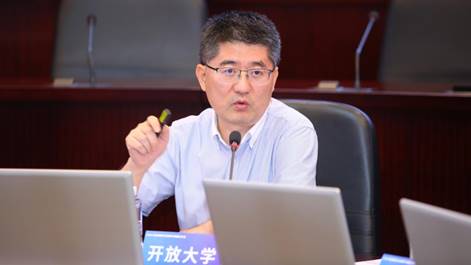
Xiao Jun introducing the Network’s key priorities for 2026
Xiao Jun, Dean of the College of Science and Technology at Shanghai Open University and Deputy Director of the Shanghai Engineering Research Center of Open Distance Education, presented the Network’s key priorities for 2026. He noted that the Network would advance its major tasks in four areas. First, taking the 2026 International Conference on Digital Lifelong Learning as an important opportunity, the Network will organize its working meeting and academic sessions, building an international platform for academic exchange and the presentation of innovative achievements, while further strengthening collaboration among members in China and abroad. Second, the Network will promote the co-construction and sharing of curriculum resources among member institutions, carry out specialized training on AI in education, and advance pilot programs for micro-credential certification. Third, it will optimize the operation of the Network’s bilingual Chinese-English official website, while continuously expanding resources such as frontier research updates in education and high-quality shared courses. Fourth, in collaboration with the AI Professional Committee of the Shanghai Association for Educational Technology, the Network will support the development of relevant technical specifications and standards.
Key Highlight: Call for Papers and Case Submissions
As one of the Network’s key annual initiatives, the Call for Papers and Case Submissions for the Academic Session on “AI-Empowered Smart Learning Ecosystems: Integrated Development” was launched on June 1, with submissions open until September 10, 2026. Jointly initiated by Shanghai Open University and the UNESCO Institute for Information Technologies in Education, the call invites submissions from Network members, scholars from universities in China and abroad, educators, and industry practitioners.
The call focuses on seven major themes: AI-driven innovation in lifelong learning and learning societies; Human-centered, inclusive, and sustainable AI in education; AI-enabled personalized and adaptive learning; Governance, quality assurance, and ethical frameworks for smart learning ecosystems; AI agents for enhancing teaching, learning, and learner support in smart learning ecosystems; Equity in AI-enabled education for learners, teachers, schools, and systems, etc. The submissions are expected to cover theoretical innovation, technological implementation, and educational practice.
Selected papers and cases will be considered for inclusion in a Springer-published edited book and other related journals. Outstanding outcomes will also be presented and exchanged during the 2026 International Conference on Digital Lifelong Learning, where they will receive recognition and awards.
Detailed guidelines on paper and case submissions, publication opportunities, and journal recommendation pathways are available on the official conference website or via the QR code below: https://dlll2026.sou.edu.cn/

Outcome Promotion: Release of the Practical Case Study Report
The meeting also featured the release of the Report on Practical Cases of AI-Empowered Innovation in Education and Teaching. As part of the Smart Education Literacy Enhancement Book Series, the report systematically reviews the development trajectories and core technological frameworks of AI and the educational metaverse. Featuring 30 selected outstanding cases across higher education, basic education, special education, and other fields, the report presents a comprehensive overview of the implementation outcomes and replicable development pathways of AI-empowered teaching in diverse educational scenarios. It provides a practical and detailed reference for digital transformation across the education sector.
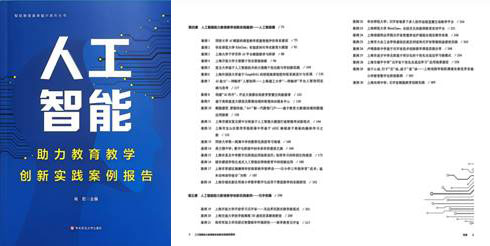
Screenshot of the report materials
Mutual Learning: Exploring Pathways to Foster Innovation
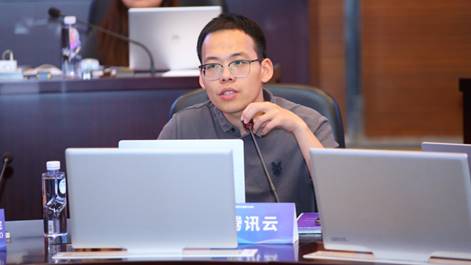
Representative from Tencent Cloud delivering a case presentation
During the case-sharing session, Tencent Cloud delivered a presentation entitled “Joyful Learning for Long-Term Growth, Human-Machine Symbiosis: Building a New Paradigm for AI + Education.” The presentation provided an in-depth introduction to the technical logic and practical applications of the latest AI agent tools in various teaching and learning scenarios, offering technical and practical references for the development of smart education across wider contexts.
In the discussion session, representatives from Network member institutions, including Shanghai Teacher Institute, Xi’an Jiaotong-Liverpool University, Alibaba Cloud, Tencent Cloud, and China Telecom Shanghai Branch, actively shared their insights. Representatives from universities and educational institutions, including the Open University of China, Tongji University, Shanghai International Studies University, Naval Medical University, Hongkou District Community College, and Ningbo City College of Vocational Technology, also joined the discussion. Research institutes and enterprises, including the Shanghai Smart City Development Institute, the Shanghai Academy of AI for Science, Seewo, and Netclass Education, contributed further perspectives. Participants exchanged views on the Network’s key priorities, including the call for papers and case submissions, the co-construction of “AI Lifelong Learning Academy” courses, AI teaching competency training for teachers, and micro-credential certification for innovative AI classroom teaching. Drawing on frontline teaching practice, technological support, community-based senior learning, and higher education research scenarios, participants proposed concrete and practical implementation approaches, offering diverse references for the Network’s future work.
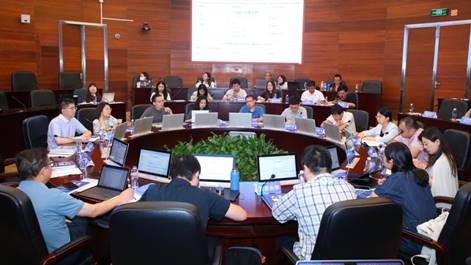
Meeting venue
Bringing together insights from academia, research, and industry, the meeting outlined the implementation roadmap for the Network’s key priorities in the second half of the year. Moving forward, the Secretariat of the Global Network for Digital Lifelong Learning will fully incorporate the practical suggestions put forward by participating representatives. It will steadily advance key initiatives, including the call for papers and case submissions, the co-construction of AI-related courses, digital literacy training for teachers, and pilot programs for micro-credential certification. The Network will also continue to bring together high-quality educational resources and innovative forces, deepen international collaboration among its members, empower inclusive lifelong education through intelligent technologies, and build an open and interconnected international learning collaboration network. Through these efforts, it will contribute to the development of an inclusive, high-quality, and sustainable smart learning ecosystem.